For decades, glioblastoma has remained one of the greatest challenges in oncology. Despite advances in surgery, radiation, and chemotherapy, survival has improved only incrementally, leaving patients and families with few effective options.
Today, however, the convergence of cellular immunotherapy, gene engineering, artificial intelligence, and precision biology is beginning to change that outlook.
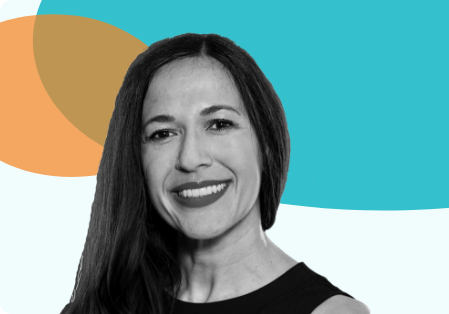
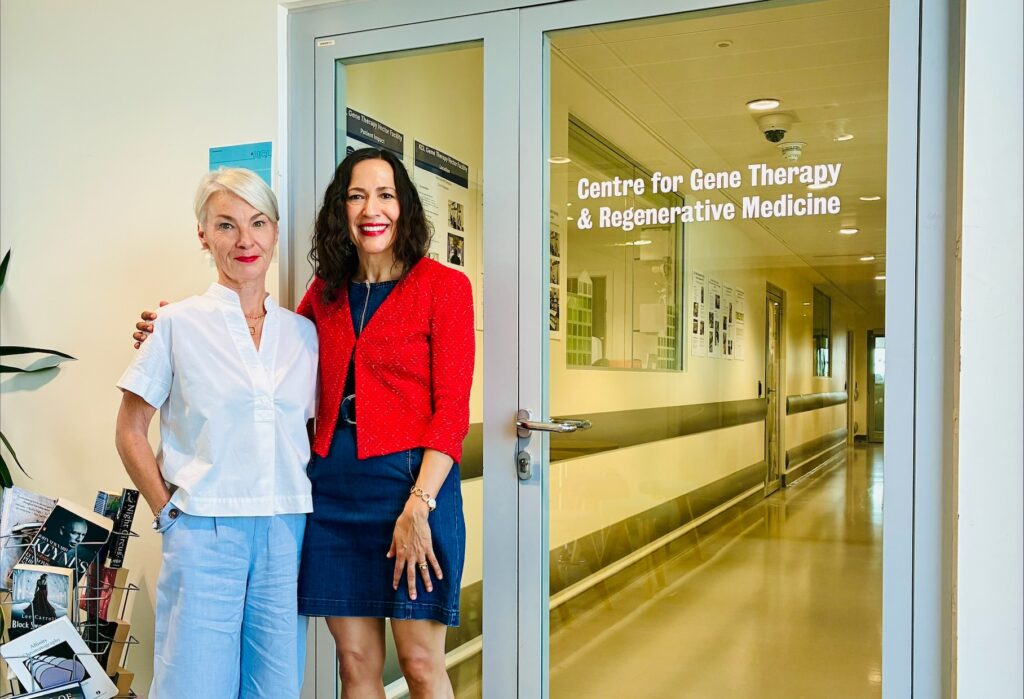
Few scientists have done more to advance our understanding of glioblastoma than Sheila K. Singh, MD, PhD, an Alliance for Cancer Gene Therapy (ACGT) Research Fellow and Scientific Advisory Council member who is the Richard Dimbleby Professor of Cancer Research, Joint Head of the School of Cancer & Pharmaceutical Sciences, Head of the Comprehensive Cancer Centre, and Professor of Neuro-oncology and Neurosurgery at King’s College London. Professor Singh also serves as Senior Strategic Advisor to Evelina London Children’s Hospital, Guy’s and St Thomas’ NHS Foundation Trust, while continuing part-time as Professor of Surgery and Biochemistry at McMaster University in Canada, where she previously served as Head of Neurosurgery, Pediatric Neurosurgeon at McMaster Children’s Hospital, and Founding Director of the Centre for Discovery in Cancer Research.
Throughout her career, Professor Singh has transformed our understanding of cancer stem cells and their role in driving glioblastoma. Most recently, her laboratory reported a landmark discovery in Nature: a novel CAR T-cell strategy targeting GPNMB, a protein expressed on both glioblastoma cells and the immunosuppressive macrophages that help tumors evade the immune system. Around the same time, an entirely different approach—developed by Professor Carl June’s laboratory at the University of Pennsylvania—also identified GPNMB as one of the most promising new targets for CAR T-cell therapy across multiple cancers.
Together, these discoveries illustrate how independent scientific approaches are converging to accelerate the next generation of cell and gene therapies.
In this conversation, Professor Singh discusses why glioblastoma has remained so difficult to treat, how engineered immune cells are changing the landscape, and why she believes global collaboration will define the future of cancer research.
Barbara Lavery:
Brain tumors remain among the most difficult cancers to treat. Why has progress been so much slower than in blood cancers?
Sheila Singh:
Brain tumors, particularly glioblastoma, represent one of the greatest challenges in oncology.
They are extraordinarily heterogeneous. No two tumors are identical, and even within a single tumor there are multiple populations of cells behaving very differently. Some respond to treatment while others survive and ultimately drive recurrence.
The brain itself adds another layer of complexity. The blood-brain barrier limits drug delivery, and the tumor microenvironment actively suppresses immune responses. We also have very little room for error because we are treating disease in the organ that defines who we are.
For many years those biological challenges made effective immunotherapy seem almost impossible. Today, advances in cell and gene therapy are giving us entirely new tools to overcome them. That’s what makes this such an exciting moment for the field.
Barbara Lavery:
You’ve spent much of your career studying cancer stem cells. How has that work shaped your vision for cell therapy?
Sheila Singh:
Cancer stem cells fundamentally changed the way I think about cancer.
These are the cells that survive chemotherapy and radiation, regenerate the tumor, and ultimately drive recurrence. Unless we eliminate those cells, we’re unlikely to achieve durable cures.
What excites me about engineered immune cells is that they can now be programmed to recognize and eliminate precisely those treatment-resistant cell populations.
Instead of simply shrinking tumors, we’re also beginning to think about how to prevent them from coming back.
That represents a profound shift.
Barbara Lavery:
CAR T-cell therapy has transformed treatment for leukemia and lymphoma. Can it do the same for glioblastoma?
Sheila Singh:
I believe it can, but it won’t look exactly like the CAR T therapies we’ve seen in blood cancers.
Solid tumors require a different playbook.
We need CAR T cells that can reach the brain, persist in an immunosuppressive environment, recognize multiple tumor antigens, and continue functioning despite constant pressure from the tumor itself.
Fortunately, the field is responding with remarkable innovation.
In addition to CAR T cells that can recognize multiple targets and are equipped with armor to resist immune suppression, we’re exploring regional delivery directly into the brain, sophisticated gene editing to improve persistence, and increasingly powerful synthetic biology approaches. Every year these therapies become smarter and more precise.
Barbara Lavery:
Congratulations on your recent Nature publication. Your team identified GPNMB as a promising new target for glioblastoma and demonstrated remarkable preclinical activity with a GPNMB-directed CAR T cell. Why is this such an important advance?
Sheila Singh:
Thank you. I think the significance of this work extends well beyond identifying another target.
Glioblastoma isn’t simply a collection of cancer cells. It’s an entire ecosystem.
The tumor recruits immune cells, particularly tumor-associated macrophages that actually help it survive, suppress immune responses, and resist therapy.
What makes GPNMB especially exciting is that it is expressed not only on glioblastoma cells but also on many of those immunosuppressive macrophages within the tumor microenvironment.
That means a single engineered CAR T cell has the potential to attack both the tumor itself and the supportive immune environment that enables the cancer to persist.
Instead of treating only one part of the disease, we’re disrupting the ecosystem that allows glioblastoma to thrive.
For a disease where recurrence has remained almost inevitable, that’s an incredibly exciting concept.
Barbara Lavery:
Almost simultaneously, Professor Carl June’s laboratory at the University of Pennsylvania identified GPNMB as the leading CAR T-cell target using an artificial intelligence-driven target discovery platform. Two completely different scientific approaches arrived at the same answer. What does that tell us?
Sheila Singh:
As scientists, that’s exactly the kind of convergence that gives you confidence you are uncovering something fundamentally important.
Our laboratory approached the problem from glioblastoma biology—asking which molecules truly drive tumor growth and immune suppression within the brain tumor microenvironment.
Professor June’s group approached the challenge from an entirely different direction. Using artificial intelligence to integrate large-scale genomic and transcriptomic datasets across multiple cancers, they sought to identify the most promising targets for future CAR T-cell therapies. Remarkably, GPNMB emerged as their highest-priority candidate.
When two independent approaches, one driven by deep biological investigation and the other by computational discovery and artificial intelligence, converge on the same target, it provides powerful validation.
It suggests we’re seeing biology that is genuinely important rather than making an isolated observation.
That kind of convergence gives the entire field greater confidence that GPNMB could become an important target not only for glioblastoma but potentially for a wide range of solid tumors.
Barbara Lavery:
Your recent move to King’s College London has also expanded your opportunities to build international partnerships. How has this role changed what’s possible?
Sheila Singh:
One of the most exciting aspects of joining King’s has been the opportunity to think globally.
Throughout my career I’ve collaborated extensively across Canada and the United States. My new role allows me to strengthen those relationships while building new partnerships throughout Europe and with leading investigators in Japan and other parts of Asia.
That’s increasingly important because no single laboratory, or even one country, can solve glioblastoma alone.
One group may develop an innovative CAR design. Another may have unique patient-derived models. Others may lead in genome engineering, computational biology, biomarker discovery, manufacturing, or early-phase clinical trials.
When you connect those capabilities, progress accelerates dramatically.
The future of cancer research is not competition.
It’s collaboration.
Barbara Lavery:
Cell and gene therapy also seems to be moving toward combination approaches rather than relying on a single breakthrough technology.
Sheila Singh:
Absolutely. I don’t believe there will be one magic bullet for glioblastoma. The biology is simply too sophisticated. The future lies in intelligent combination therapies.
We’ll combine engineered immune cells with gene editing, targeted therapies, radiation, oncolytic viruses, checkpoint modulation, and technologies that reshape the tumor microenvironment.
Artificial intelligence will increasingly help us identify which combinations are likely to work best for individual patients.
Rather than asking which single therapy will cure glioblastoma, we’re asking how multiple technologies can work together.
That’s where I believe we’ll see the greatest advances over the next decade.
Barbara Lavery:
What excites you most about where cell and gene therapy is heading over the next five to ten years?
Sheila Singh:
What excites me most is convergence.
Ten years ago, advances in genomics, single-cell sequencing, gene editing, synthetic biology, artificial intelligence, biomarker discovery, and cellular engineering were progressing largely in parallel.
Today they’re converging into entirely new therapeutic strategies.
We’re beginning to understand tumors at single-cell resolution. We’re using artificial intelligence to identify new therapeutic targets. CRISPR allows us to engineer immune cells with increasing precision, while advances in gene delivery and manufacturing are making these therapies more practical and accessible.
Alone, none of these innovations is sufficient. But together they become transformational.
I genuinely believe the next decade will redefine what’s possible – not only for glioblastoma but for many solid tumors.
Barbara Lavery:
As someone who has spent your career pushing the boundaries of brain tumor research, what message would you leave with the supporters of Alliance for Cancer Gene Therapy?
Sheila Singh:
Every major advance in medicine begins with someone willing to ask a difficult question and with someone willing to believe in that question before anyone knows the answer.
That’s the role philanthropy plays.
Organizations like ACGT make it possible for scientists to pursue bold, high-risk ideas that may be too early for traditional funding but have the potential to transform an entire field.
Many of tomorrow’s standard therapies will trace their origins back to those first investments in innovative science.
But perhaps the greatest opportunity ahead isn’t any single technology.
It’s our ability to bring technologies and people together.
The future won’t be built by a single laboratory or a single discovery. It will be built through global collaborations that unite the very best ideas in cell therapy, gene engineering, neuroscience, computational biology, and immunology. It will be built through intelligent combination therapies that combat cancer from multiple directions. And it will be built by scientists, clinicians, engineers, and philanthropists working together with one shared purpose.
For patients with brain tumors, that future cannot come soon enough.
Yet, for the first time in my career, I believe we have the scientific tools, and the collaborative spirit, to fundamentally change what is possible.
That is why I remain profoundly optimistic. Every collaboration, every discovery, and every investment in bold science brings us one step closer to turning hope into cures.


