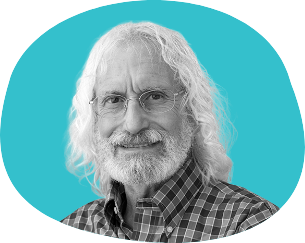

Renier Brentjens, MD, PhD, helped create the first chimeric antigen receptor (CAR) T cells to cure patients with blood cancer. Now, as an Alliance for Cancer Gene Therapy (ACGT) Research Fellow, he’s tackling solid tumors and engineering next-generation CAR T cells that could potentially treat all cancers.
As a young postdoctoral researcher at Memorial Sloan Kettering Cancer Center in the early 2000s, Dr. Brentjens worked on one of the very first ACGT grants in the lab of Michel Sadelain, MD, PhD. Ultimately, the research led to the launch of the first-in-human trials of CD19-targeting CAR T cells for leukemia and the first cell therapy approvals. The incredibly rapid and complete remissions in children and adults were the first clinical sparks that lit the cell therapy revolution in oncology.
And yet, more than two decades later, almost all solid cancers still lack satisfactory cell therapy solutions.
Closing that gap is the challenge that now occupies Brentjens, who currently serves as Deputy Director, Chair of the Department of Medicine, and The Katherine Anne Gioia Endowed Chair in Cancer Medicine at the Roswell Park Comprehensive Cancer Center in Buffalo, NY.
To describe his approach, he referenced a memory from years ago on an airport tarmac in London. Admiring the Rolls-Royce logo on the jet engines, a friend and colleague remarked how unlikely it was that all four would give out in the air. Jet engines are designed to the most exacting standards, so that their function persists even in extreme circumstances, because the entire plane depends on them. Rolls-Royce doesn’t make the wings, or the wheels, or the seats. It only focuses on the engines, but it makes them better than almost anyone.
Brentjens thinks about cancer the same way. For him, everything begins with the engine— the CAR T cell itself—and with building one powerful and reliable enough to work where others have failed. And with his ACGT Investigator Award in Cell and Gene Therapy for Gynecological Cancer Research, he has big ambitions.
“We want to be the Rolls-Royce of CAR T-cell engines,” he declared. “To make an engine that won’t fail.”
Why current CAR T-cell engines still stall
The first barrier to designing effective CAR T cells for solid cancers, Brentjens explains, is the tumor environment itself. Solid tumors contain significant numbers of non-tumor cells; the supporting cast the cancer recruits and manipulates to protect itself. These include immunosuppressive immune cells that shut down an attack and fibroblasts that give the tumor structure and help it spread. Even when the immune system recognizes the cancer, that hostile tumor environment defuses its response. Blood cancer cells, circulating and exposed, have no such fortifications, so the CAR T cells that target them were never designed for this tougher terrain.
The second barrier is that solid tumor cells are not uniform. They mutate unevenly, forming a heterogeneous population in which cells on one side of a tumor may look nothing like those on the other. Engineer a CAR T cell against a single target, and it could clear every cancer cell that carries that target, but the cells that don’t carry that target will simply escape detection and regrow the tumor. This phenomenon, known as antigen escape, is a central obstacle for CAR T cells in solid tumors.
An effective CAR T-cell engine must drive a response that overcomes both problems: the hostile tumor environment and the antigen escape route.
The cytokine that changes the fight
The main enhancement that sets Brentjens’s engine apart is a single, potent addition: his CAR T cells are engineered to secrete a powerful pro-inflammatory cytokine called interleukin-18 (IL-18).
When Brentjens’ CAR T cells reach the cancer, the IL-18 they release reprograms the tumor environment around them, flipping suppressive macrophages into inflammatory ones, keeping the CAR T cells from being shut down, and, as he puts it, “exposing the tumor to the full force of the immune system.” The patient’s own immune cells previously held in check reactivate and join the assault, and the engineered CAR T cell activates a far larger immune response.
That recruitment of the immune system is also the key to the antigen escape problem. Once the person’s native immune system is drawn in, it begins recognizing other targets on the tumor in addition to the original CAR T-cell target. This phenomenon is called antigen spreading, and it allows the immune response to reach the cancer cells that a single-target therapy would have missed.
However, none of this engineering will work unless the CAR T cells reach the tumor and know what to strike. That is the job of the CAR itself, which Brentjens’ team aims at MUC16, a protein overexpressed on most ovarian tumors and rarely found on healthy tissue. MUC16 is also tied to the disease’s ability to spread, making it not just a risk marker but also a potential therapeutic vulnerability.
These two modifications work together to target cancer cells effectively. The anti-MUC16 receptor tells the engine where to drive while the IL-18 gives it the power to win the race.
Brentjens’ CAR T cells are manufactured basically the same way as the CAR T-cell therapies already approved for blood cancers: from a patient’s own T cells that are harvested, enhanced, and then reinfused. But because he will be treating patients with ovarian cancer, his therapeutic plan is to deliver the CAR T cells both intravenously and directly into the peritoneal cavity, the abdominal space where ovarian tumors grow and spread. With ACGT support, Brentjens’s team is advancing the therapy from the lab into its first trial in patients with recurrent, platinum-resistant ovarian cancer.
The support from ACGT, in Brentjens’ view, not only helps pay for the trial, but also provides funds for the costly follow-up analyses that reveal not just whether the therapy works, but why.
“If it works, we need to know why it works,” he said. “And more importantly, if it doesn’t work, we need to know why it doesn’t work.”
A trial measured on survival alone might show a small benefit and leave no clue how to build on it. That deeper analysis, Brentjens argues, is how a field actually makes leaps forward.
Questioning assumptions
The desire to dig deeper for insights and improvements extends to one of the field’s most entrenched assumptions. Conventional CAR T-cell therapy requires lymphodepletion, a harsh round of chemotherapy that clears out a patient’s existing T cells before the engineered CAR T cells are infused. The field treats it as essential. Brentjens is not so sure.
For traditional CAR T cells, especially in blood cancer, he says you should not skip it. But CAR T cells that secrete IL-18 are built to attract and activate the patient’s own immune cells—and lymphodepletion “wipes out exactly the cells that you’re trying to recruit”. Clear the field first, and you may be committing friendly fire against waiting reinforcements, forfeiting the antigen-spreading approach the therapy aims to elicit. Furthermore, if lymphodepletion could be avoided, it might be possible to administer CAR T-cell therapy in an outpatient setting rather than an ICU.
Brentjens holds both ideas at once: that lymphodepletion can be genuinely valuable, but also that it may be counterproductive in the very cases his CAR T cell is designed to treat.
That tension—lymphodepletion as both ally and obstacle—points to something larger about how Brentjens sees the field’s future. The answer, he suspects, won’t be a single therapy that beats cancer, but a decision made, to some extent, tumor by tumor and patient by patient. A biopsy that tells the lab which targets to pursue and how to tune the engine to drive responses in a particular tumor, and whether pretreatment conditioning might be important. Different cancers, and different patients, will demand different CAR T-cell engines and therapeutic strategies.
Every one of them, he insists, must be built for performance first. Only once a CAR T-cell engine wins reliably does it make sense to add noncritical features, like being cheaper and faster to manufacture and simpler to administer. Cell therapy isn’t there yet, Brentjens believes. As long as these treatments still can’t reliably cure patients with solid tumors, the field can’t afford to optimize cost and convenience over therapeutic power.
“We need to focus on CAR T-cell engines that meet F1 performance standards,” he said. “Once we’ve succeeded there, we can make more consumer-friendly versions.”