T cell researchers receive the Nobel Prize in Physiology or Medicine.
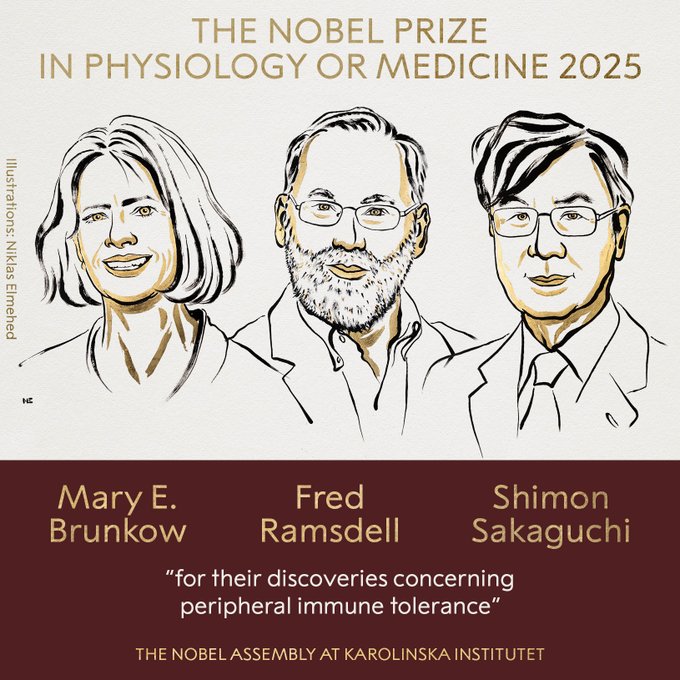
Three immunology researchers, Mary Brunkow, PhD (Institute for Systems Biology), Fred Ramsdell, PhD (Sonoma Biotherapeutics) and Shimon Sakaguchi, MD, PhD (Osaka University), received the Nobel Prize in Physiology or Medicine for their historic discoveries on the role of regulatory T cells in the function of the human immune system and how they prevent the human immune system from turning against itself.
Their research has provided some of the bedrock upon which more modern immunology has been built, and has made further insights into the use of T cells to fight cancer possible. Their enlightening lecture on their discoveries is available for viewing on YouTube.
Link Industries launches to create next-gen CAR-T therapies.
The biotechnology company Link Industries announced on December 15 that it is officially launching with a mission to create next-generation CAR-T therapies for cancer, touting $60 million in series A financing led by Johnson & Johnson’s venture capital organization, among other big-name investors.
Link Industries was founded in 2022 out of Stanford University, with founders that include ACGT SAC member Crystal Mackall, MD. Their lead program is in preclinical development for renal cell carcinoma, and another program for colorectal cancer is set to begin in-human testing in 2027.
Rockefeller researchers reveal new findings on TCR function.
Researchers from The Rockefeller University published findings revealing new key observations on the function of T-cell receptors (TCR), providing a deeper understanding on how the TCR signaling system works that could allow for refinement and expansion of T cell therapies for new types of cancer.
Their research used a lipid mixture that replicated a TCR’s in vivo environment, which, when removed with detergent, showed that TCRs activate when encountered with an antigen or suspect particle, discoveries that ran counter to previous cryogenic electron microscopy analyses.
Vyriad unveils new in vivo CAR-T candidate.

The biotechnology company presented data on its lead in vivo CAR T therapy candidate, VV169, at the American Society of Hematology (ASH) Annual Meeting, showing 100% clearance of disseminated myeloma tumors in mice within 28 days.
Led by CEO and ACGT SAC member Stephen J. Russell, MD, Vyriad also presented promising data on lentiviral vector retargeting strategies across three in vivo approaches. Vyriad plans to begin a clinical trial in the United States this year.
Base-edited gene therapy shows results
against T-ALL.
A team of researchers at Great Ormond Street Hospital published results in the New England Journal of Medicine showing that their base-edited CAR therapy, BE-CAR7, has been used to treat a previously untreatable form of blood cancer, T-cell acute lymphoblastic leukemia.
Starting in 2022, 11 people, including nine children, have undergone the treatment as part of a clinical trial that has resulted in 82% going into deep remission and 64% now presenting as disease-free, with only manageable and tolerable side effects.
Clinical Cancer Research
Pancreatic Cancer Organoids Recapitulate Chemotherapy Response and Identify a Potent Cytotoxic T-Cell Population.
A team of researchers, including ACGT SAC Chair Michael T. Lotze, MD (University of Pittsburgh), published results from a study using tumor-infiltrating lymphocytes (TILs) and patient-derived organoids (PDOs) to predict the individual components of potentially successful combination therapies for pancreatic ductal adenocarcinoma.
Blood
Long-term Follow-up of Gastrointestinal CAR T-cell Lymphoma: Homing, Clonal Expansion, and Response to Cyclosporine.
ACGT SAC member Crystal Mackall, MD (Stanford University), was co-author of a study that investigated the mechanisms underlying CAR T-cell-associated lymphomagenesis in a lymphoma patient, producing insights on the patient’s response to cyclosporine and how CAR T-cell therapy interacts with the tumor microenvironment.
Journal for Immunotherapy of Cancer
A phase I clinical trial of intravesical therapy with autologous tumor-infiltrating lymphocytes (TIL) in BCG-exposed non-muscle invasive bladder cancer.
Researchers, including ACGT SAC member Shari Pilon-Thomas, PhD (Moffitt Cancer Center), published results from a Phase I trial of an intravesical TIL therapy for nine patients with high-risk non-muscle invasive bladder cancer, producing positive results that “support the feasibility of this approach.”