
October 2026.
Michael T. Lotze, MD (UPMC Hillman Cancer Center)
Shari Pilon-Thomas, PhD (Moffitt Cancer Center)
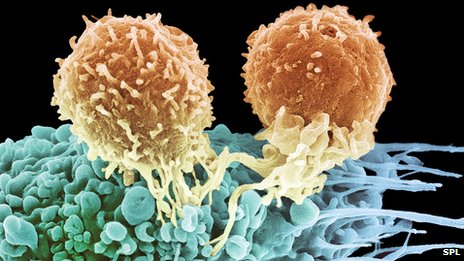
Long before CAR T cells made headlines, tumor-infiltrating lymphocyte (TIL) therapy was in clinical trials treating patients at the National Cancer Institute in the 1980s. Decades later, it finally became the first T-cell therapy approved anywhere in the world for a solid tumor, melanoma, in February 2024. We spoke with two members of ACGT’s Scientific Advisory Council—TIL pioneer and Council Chair Michael T. Lotze, MD (University of Pittsburgh), and TIL expert Shari Pilon-Thomas, PhD (Moffitt Cancer Center)—about how TIL works and why its diversity of T cells makes it so potentially powerful against solid tumors. They also described how researchers are working to make it safer and more effective not just for melanoma, but for other hard-to-treat cancers like pancreatic and lung.
“I think we’re out far enough in TIL space where we can, without embarrassment, talk about true cures,” Dr. Lotze said.
Read the full story.
In December 2019, after multiple surgeries, chemotherapy, and three attempts to treat his melanoma with immunotherapy, Chris White was told to consider hospice care. A brain metastasis nearly shut him out of a clinical trial using TIL therapy. He raced to get radiation and a clean scan, and on January 15, 2020, he became the last patient dosed in the registrational trial of lifileucel (Amtagvi). His cancer was gone in less than a year. He has shown no evidence of disease since.
Today, Chris is an author, a patient advocate and expert speaker, and host of the TIL Talks podcast. He describes cell therapy this way: “This is winning the war, not just the battle.”
Read Chris’s full story.
ACGT’s support for TIL runs from the lab bench to the clinic to the leadership of our Scientific Advisory Council.
- Michael T. Lotze, MD, who pioneered TIL at the NCI and is now at UPMC Hillman Cancer Center, is the Chair of ACGT’s Scientific Advisory Council (SAC) and has served on the SAC since 2003.
- Shari Pilon-Thomas, PhD, joined ACGT’s SAC in 2024, and currently leads TIL efforts at Moffitt Cancer Center. Her collaborations have produced TIL trials in melanoma, sarcoma, bladder, head and neck, and cervical cancers.
- Amer Zureikat, MD, FACS, an ACGT Research Fellow at the University of Pittsburgh, is developing TIL therapy from gamma delta T cells for metastatic pancreatic cancer. These cells can make up as much as 40% of the TILs in pancreatic tumors.
- George Coukos, MD, PhD, an ACGT Research Fellow at Weill Cornell Medicine, credits ACGT with funding his very first lab in 2006. He is now a leader in refining TIL methods. This year he launched the Ludwig Laboratory for Cell Therapy at Weill Cornell Medicine.
- Steven A. Rosenberg, MD, PhD, a TIL trailblazer at the NCI, was honored by ACGT in 2025 with the Edward Netter Leadership Award.
- 2026 Investigator Awards. ACGT’s award for solid tumors specifically invited proposals for TIL therapies enhanced through genetic modification or functional optimization. Awards will be announced in December.

On October 1, ACGT marked 25 years of championing cancer cell and gene therapy research at the Riverside Yacht Club in Greenwich, Connecticut. The evening’s Edward Netter Leadership Award honored three groups that, in the words of ACGT President and CEO Kevin Honeycutt, “tell the whole story of this field.” Those groups were the ACGT Scientific Advisory Council, Swim Across America – Fairfield County, and CAR T-cell therapy patients, among them Emily Whitehead, the first child in the world to receive the therapy.
In his keynote, ACGT Research Fellow Ben Stanger, MD, PhD, of the University of Pennsylvania, noted that the U.S. cancer death rate has fallen about 1% a year for 35 years, adding up to roughly 4.8 million deaths averted. His lesson: “Big changes come from small changes.”
“Scientists. Supporters. Survivors,” Honeycutt said. “That is the chain—and nearly everyone in this room is a link in it.”
Read the full recap of this milestone celebration and learn more about ACGT’s progress in our 2026 Annual Impact Report.
Sheila K. Singh, MD, PhD, an ACGT Research Fellow and Scientific Advisory Council member, delivered her inaugural lecture at King’s College London—“The evolution of brain tumour initiating cells: Chasing a moving target”—on Wednesday, October 7 at Guy’s Campus. The pediatric neurosurgeon-scientist joined King’s in early 2026 from McMaster University. She is now Richard Dimbleby Professor of Cancer Research, Joint Head of the School of Cancer & Pharmaceutical Sciences, and Head of the Comprehensive Cancer Centre. Her lab recently identified GPNMB as a promising new CAR T-cell target in glioblastoma.
Christine Brown, PhD, an ACGT Scientific Advisory Council member at City of Hope, has been named to Forbes’ 2026 50 Over 50: Innovation list.
Forbes’ 2026 50 Over 50 features 200 women across four categories. Nominees are judged partly on what they achieved after age 50.
Forbes cited her work bringing CAR T-cell therapy to glioblastoma, a brain cancer with five-year survival under 10%. Her early trials showed CAR T cells can be delivered safely to the brain, and one patient has stayed in complete remission for six years.
This year she launched a clinical trial of gene-edited CAR T cells built to work better against the tumor. The cells target IL13Rα2, and CRISPR removes the receptor for TGF-β, a suppressive signal, so they stay active in the brain’s hostile environment.
Read the Forbes feature, and learn more about Dr. Brown’s lab and clinical trials.
In vivo CAR T therapy shows striking early results in multiple myeloma. At the International Myeloma Society meeting on September 26, IASO Bio reported first-in-human results for IASO206, a single infusion that generates BCMA-targeted CAR T cells inside the body. It requires no lab manufacturing and no lymphodepleting chemotherapy. Among the first 10 patients, 90% responded and 90% had no detectable residual disease. Three dose levels were evaluated in the trial, and all patients treated at the highest dose experienced responses. Ten days earlier, the FDA cleared the company’s second in vivo CAR T, IASO208, for a U.S. lymphoma trial.
City of Hope unveils “plug-and-play’ CAR T cells that can be upgraded after infusion. In a preclinical study published in Cancer Immunology Research, researchers engineered CAR T cells that can accept new molecular add-ons after they are infused. The add-ons could help the cells track, grow, and recognize a broader range of cancer cells. The co-senior author is ACGT Scientific Advisory Council member Christine Brown, PhD, who is also featured above in this issue as part of Forbes 50 Over 50: Innovation. Two phase 1 trials are being prepared, one in solid tumors and one in acute myeloid leukemia.
FDA launches pilot to speed first-in-human trials. On September 15, the FDA opened applications for its Expedited IND Pilot, which pairs drug developers with qualified research institutions to shorten the path to first-in-human trials. The FDA expects to initially select 8 to 10 developer and institution pairs. Applications are due October 30.
Why off-the-shelf CAR T cells work in some patients but not others. An MD Anderson study published September 25 in Cancer Discovery examined donor-derived CAR T cells in patients with large B-cell lymphoma. Some patients’ immune systems rejected the cells before they could expand. The team also identified CAR T cell populations that were better equipped to multiply and persist. This points to better donor selection and manufacturing for off-the-shelf products.
Gut bacteria may help or hinder CAR T-cell therapy. A new study in Cell found that metabolites produced by gut microbes can either boost or suppress CAR T-cell function, with a major effect on outcomes. A metabolite-based risk score predicted which patients would respond.
In vivo CAR T shows early promise in multiple sclerosis. A small early-stage study reported in the New England Journal of Medicine tested JY231, an “off-the-shelf” lentiviral vector administered via a single intravenous infusion to directly engineer the patient’s CD19-targeted CAR T cells inside their body. It was associated with less disability and improved motor and cognitive function in seven patients with neurologic autoimmune disease who participated in the clinical trial.
Roswell Park launches a trial of “armored” CAR T cells for ovarian cancer. On October 1, Roswell Park Comprehensive Cancer Center treated the first patient in a phase 1 trial of GB-5267, a CAR T-cell therapy developed with Generate Biomedicines. The therapy targets MUC16, which is overexpressed in more than 80% of ovarian tumors, and is armored with the cytokine IL-18 to help the cells withstand the tumor’s suppressive environment. The cells are delivered both intravenously and into the abdominal cavity, where ovarian cancer spreads, and the trial does not require lymphodepleting chemotherapy. It is enrolling patients whose cancer has returned or is resistant to platinum chemotherapy.


